
Hamburg’s Water – A Blessing and a Curse at Once?
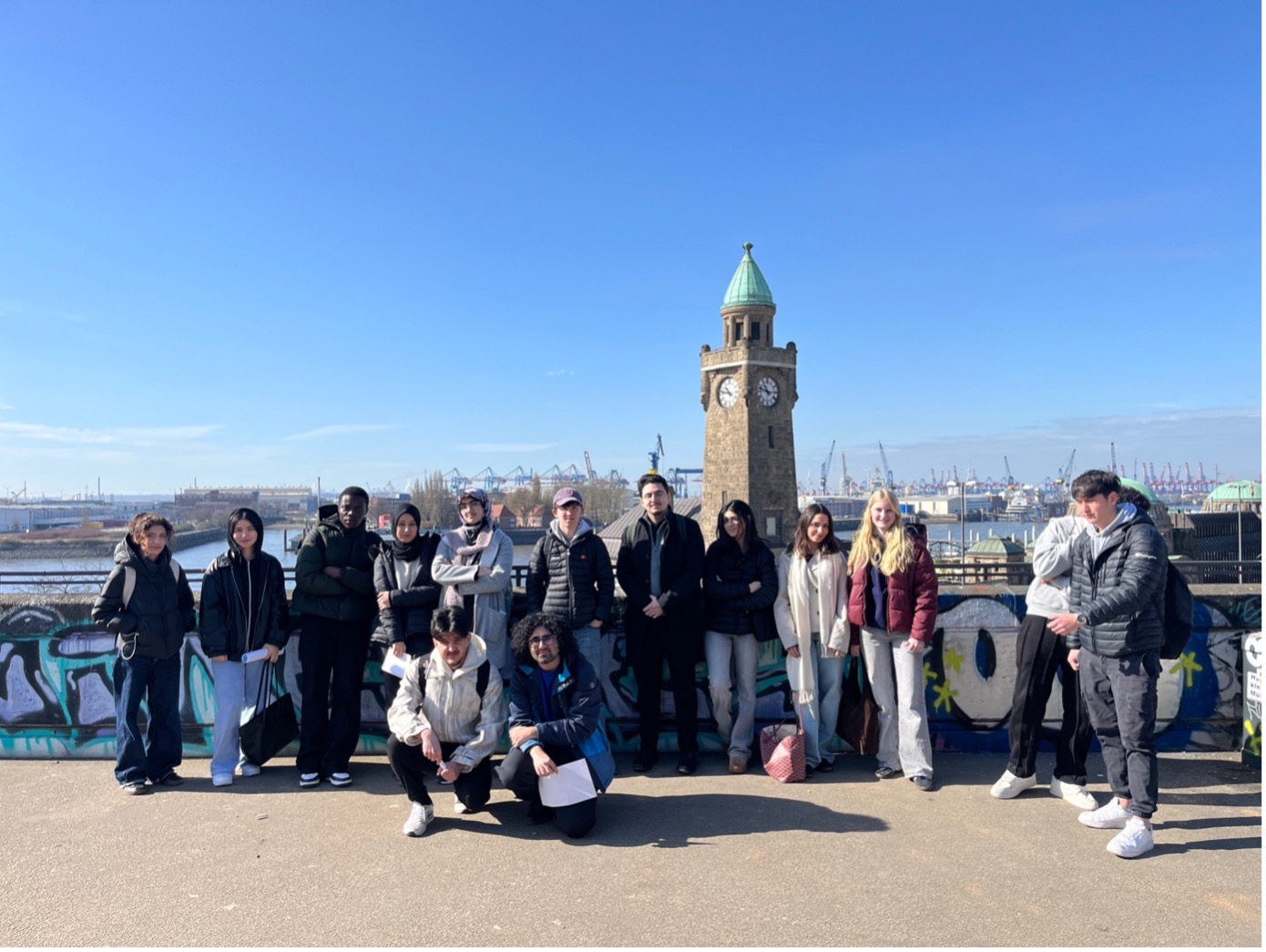
On April 2, our 11th-grade geography class undertook a field excursion through Hamburg as a regional case study on the topic of the “water cycle”. The city walk was organized under the theme “Water as a vital resource and a challenge in Hamburg” and led us from City Hall along the Alster to the Landungsbrücken. Throughout the excursion, we gained insight into how closely the urban water cycle is intertwined with politics, the economy, the environment, and everyday life.
At the outset, at City Hall, we learned about the crucial role political decision-making plays in water management. Particularly in the 19th century, Hamburg faced severe problems related to water supply and sanitation. Faulty decisions at the time contributed to the spread of cholera, underscoring the vital importance of clean water for urban life.
At the Binnenalster, we explored the significance of water for Hamburg’s development. We learned that the Alster was originally a river that was later dammed, illustrating how human intervention can alter natural waterways and, consequently, the water cycle. In the past, water was used not only as a source of drinking water but also for waste disposal.
Another key focus was the Port of Hamburg and the role of the Elbe. Although Hamburg is located approximately 100 kilometers from the North Sea, it remains a major port city. We learned that the Elbe must be regularly dredged to allow large vessels to navigate it. Tidal forces—ebb and flow—also play a significant role in Hamburg. The tidal range affects not only port operations but also flood protection measures.
Overall, the excursion was both highly engaging and educational. It demonstrated how the water cycle operates in Hamburg and the extent to which it is shaped by human activity. It thus became clear that water management is not merely a natural issue, but also a societal and political one. (Sara und Ahmed, VS28)